
As ecommerce demand continues to grow, so do customer expectations. Shoppers demand fast, personalised, and consistent support, whether they’re reaching out via email, social media or SMS. There comes a point where a dedicated helpdesk is necessary.
In this guide, we’ll walk through a small number of my top ecommerce helpdesk solutions, what to look for when choosing one and a breakdown of the five platforms most commonly used across the most common ecommerce platforms including Shopify, Magento and others.
What Is an Ecommerce Helpdesk?
An ecommerce helpdesk, or service desk, is software designed to manage and streamline customer support. It’s effectively a central inbox for handling enquiries across a variety of channels, for example email, live chat, social media and sometimes even voice or SMS, all in one place.
But modern helpdesks do more than just manage tickets. Some of the best tools today also offer:
- Order visibility and customer history pulled directly from your ecommerce platform
- AI-powered automation for tagging, routing, and drafting replies
- Canned responses and macros to speed up repetitive tasks
- Customisable workflows that support your fulfilment or returns process
- Multi-agent collaboration and internal notes to keep teams aligned
What to Look for in an Ecommerce Helpdesk
When evaluating helpdesk software, consider some of the following:
- Channels supported: Email is a given but what other channels are causing a bottleneck in your operation, Instagram DMs and WhatsApp for example?
- Ease of use: Will your support team actually enjoy using it? Is it fast, intuitive, and mobile-friendly?
- Platform integration: Does it connect natively with your ecommerce platform, such as Magento or Shopify? Can it pull in order data and customer history?
- Automation and AI: Does it offer next-gen features like auto-tagging, suggested replies or AI summarisation?
- Customisation and scalability: Can it scale with your business and support multi-brand or multi-store setups?
The Top 5 Ecommerce Helpdesk Solutions
Here’s a breakdown of five of my standout platforms, each with their own strengths depending on your tech stack, budget, and support needs.
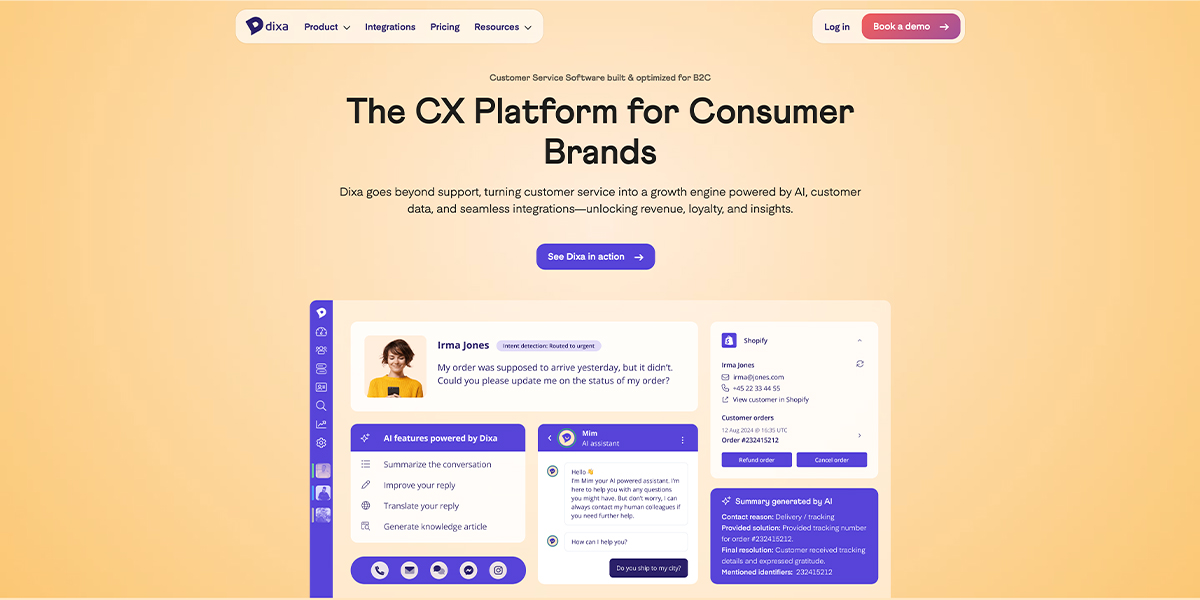
1. Dixa
Integrates with: Shopify, Magento
Best for: Mid-size to large retailers looking for unified multichannel support with built-in voice and automation.
Pros:
- Modern, user-friendly interface with a true omnichannel approach
- Strong voice and telephony features built-in, with no need for a separate phone system
- Powerful automation and routing tools
- Native Shopify and Magento integrations to view customer/order data inline
Cons:
- Can be overkill for small teams
- Pricing is on the higher end and tends to scale quickly
- Magento integration requires setup/configuration work
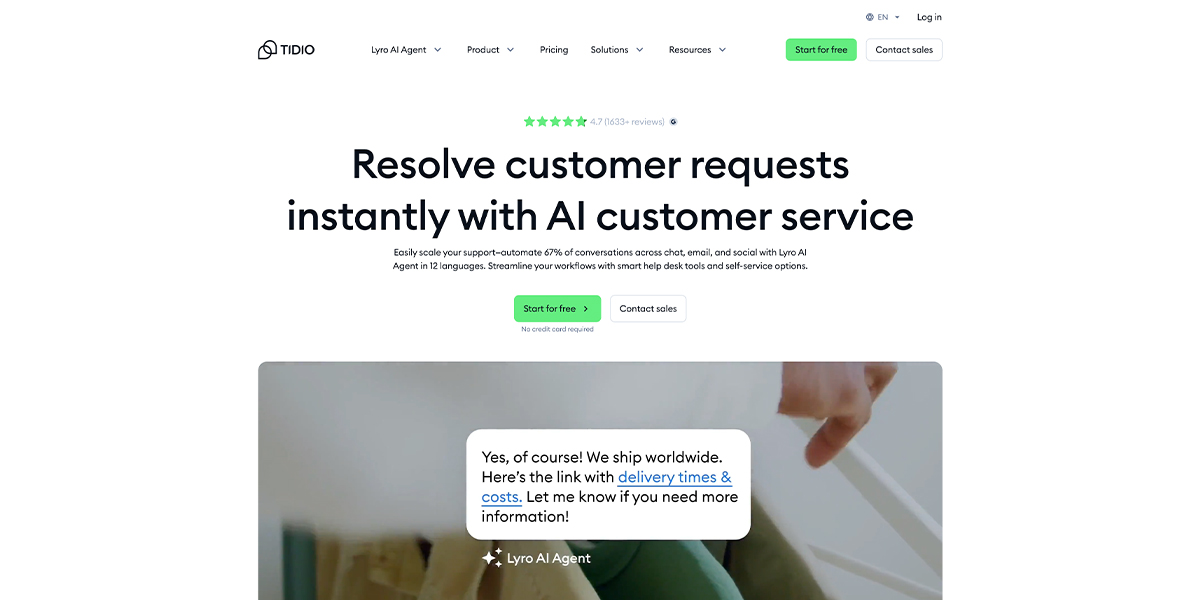
2. Tidio
Integrates with: Shopify, WooCommerce
Best for: Small to medium Shopify brands looking for affordable live chat and chatbot functionality.
Pros:
- Very easy to set up and use, especially for Shopify stores
- Built-in AI chatbots and automation tools included even on lower plans
- Affordable pricing with strong value for small teams
- Visually slick widget and mobile app
Cons:
- No native Magento integration
- Limited ticketing functionality compared to larger helpdesks
- Better suited to live chat than full multi-channel support
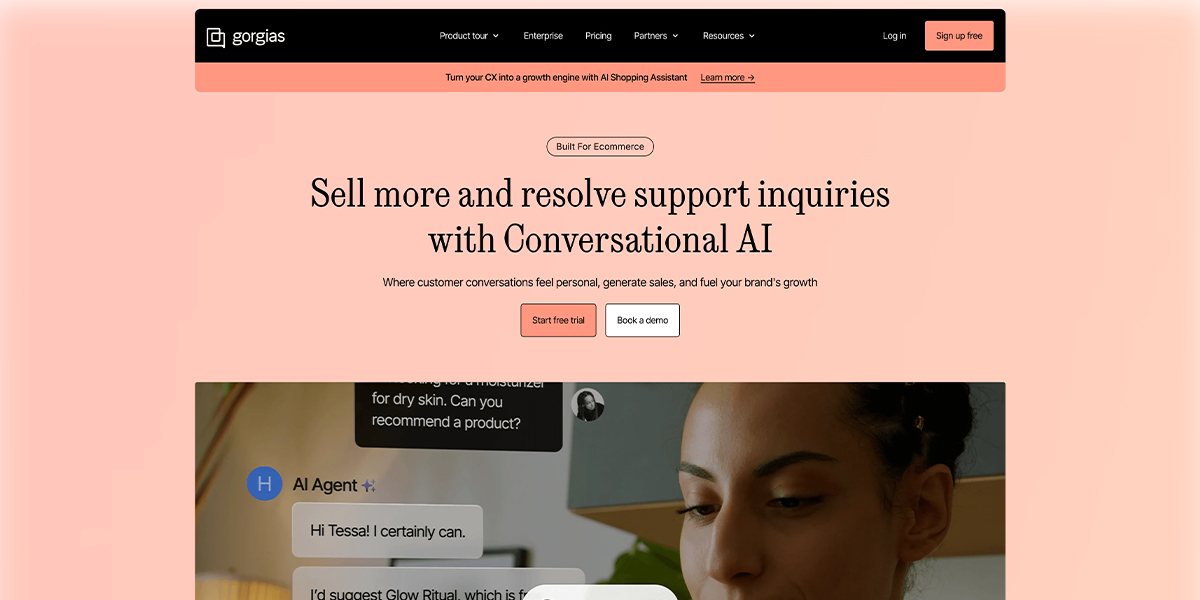
3. Gorgias
Integrates with: Shopify, Magento
Best for: High-growth DTC brands needing deep ecommerce integrations and automation.
Pros:
- Built specifically for ecommerce with tight Shopify and Magento integrations
- Shows customer order data, delivery status, and purchase history next to each ticket
- Strong automation tools for tagging, prioritising, and responding
- Excellent developer documentation and active support
Cons:
- Pricing increases quickly with ticket volume
- Not ideal for teams handling a high volume of non-ecommerce-related support
- Reporting features are improving but still limited on lower tiers
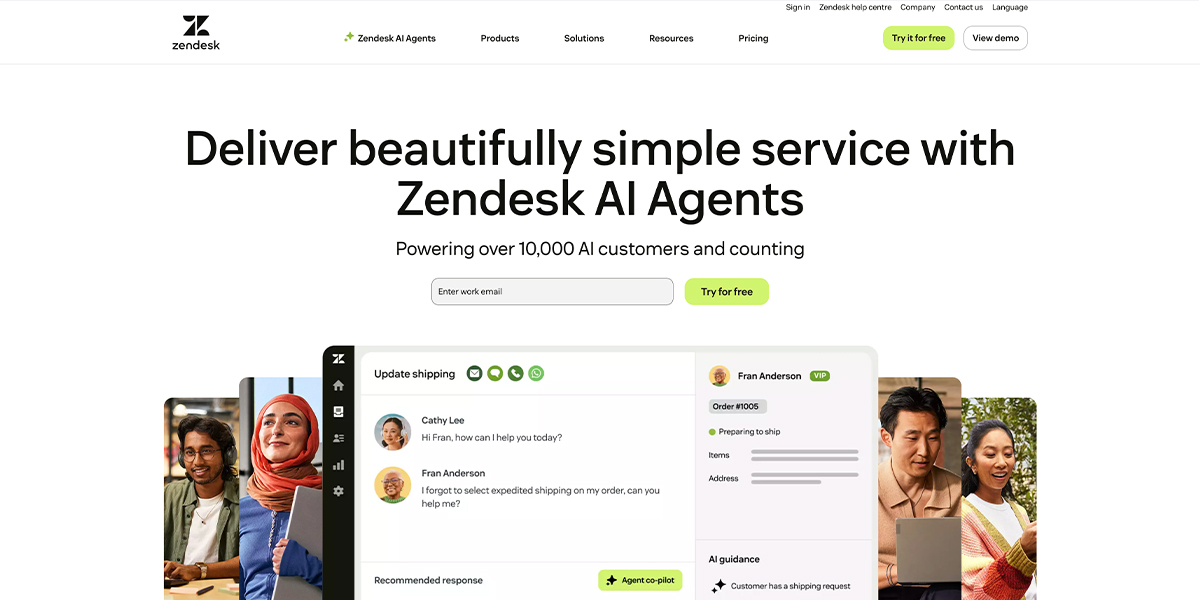
4. Zendesk
Integrates with: Shopify, Magento
Best for: The gold standard of helpdesk solutions, large or enterprise retailers needing custom workflows, advanced reporting, or IT support overlap.
Pros:
- One of the most mature platforms in the market with enterprise-grade features
- Extremely flexible and customisable workflows
- Deep Magento and Shopify integrations with robust APIs
- Strong developer docs and marketplace for extensions
Cons:
- Can feel bloated or overwhelming for smaller support teams
- Requires time and technical effort to set up properly
- Add-ons, like AI or chat, can increase cost significantly
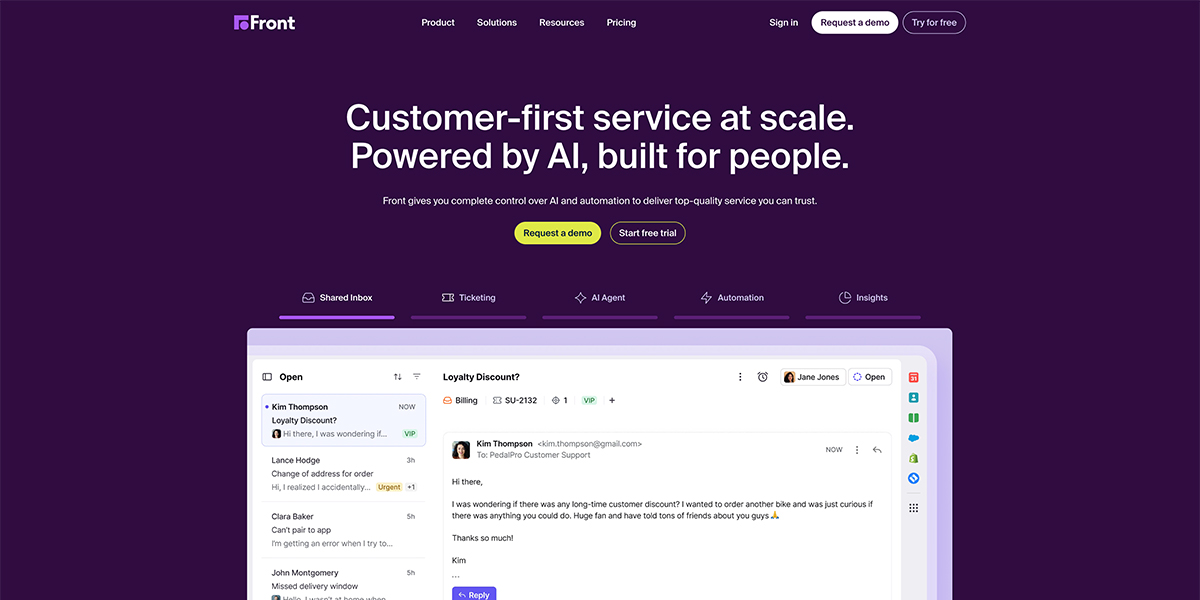
5. Front
Integrates with: Shopify
Best for: Teams focused on collaboration and shared inboxes over traditional ticketing systems.
Pros:
- Email-first approach with a focus on team collaboration
- Clean, minimal UI that feels like a supercharged shared inbox
- Good Shopify integration for viewing order data inline
- Great for startups or lean support teams working across multiple tools
Cons:
- No Magento integration
- Limited ticketing or multi-channel features compared to traditional helpdesks
- Better suited for conversational support, not complex ticket flows
Final Thoughts
Choosing the right ecommerce helpdesk software depends on your size, tech stack, and the type of support experience you want to deliver.
- Dixa and Zendesk are best for larger teams or enterprise setups needing voice support and flexibility.
- Gorgias hits the sweet spot for Shopify and Magento merchants who want ecommerce-specific automation and workflows.
- Tidio offers a low-cost, high-impact solution for smaller stores focused on live chat and AI automation.
- Front is ideal for startups or lean teams that want a more natural, email-style support flow.
Need help choosing or integrating a helpdesk solution?
I’m an independent ecommerce consultant with experience implementing tools like Gorgias, Zendesk, and Tidio across Shopify, Magento, and custom platforms.
If you need help selecting the right solution, integrating it with your store or training your team to get the most from it, feel free to get in touch.